
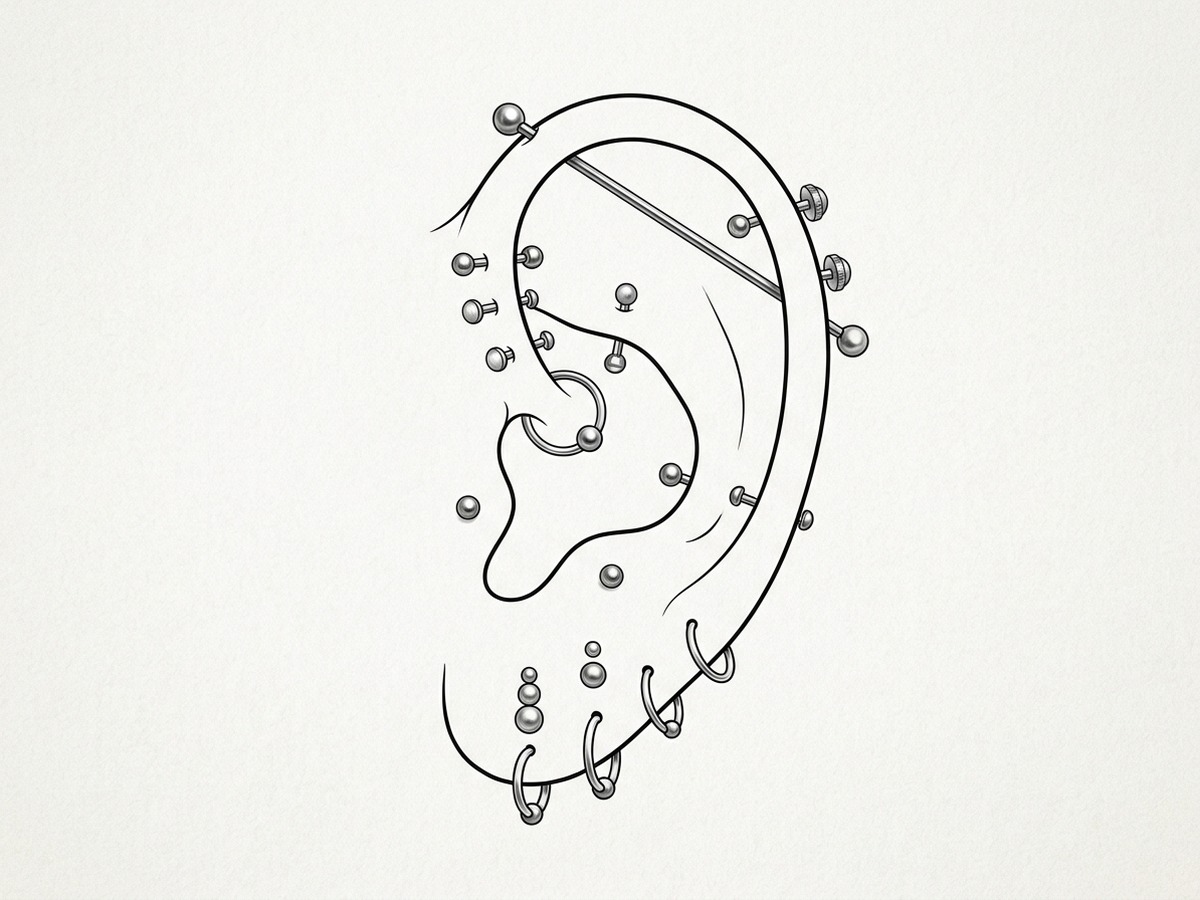
What It Is
Ear piercing covers many placements, from classic lobe piercings to cartilage placements such as helix, tragus, conch, rook, daith, and flat piercings. Each placement sits in a different area of tissue, so the right jewelry depends on anatomy, healing stage, comfort, and the look you want. A lobe piercing may work with simple studs or small hoops, while cartilage placements often need flat backs, labret-style studs, curved details, or carefully sized rings.
Common Jewelry Types
Common ear jewelry includes flat back earrings, labret studs, cartilage studs, small hoops, captive bead rings, clickers, curved barbells for specific placements, and industrial barbells for connected cartilage piercings. Flat backs are popular for daily wear because the back is smooth and low profile. Hoops can look clean and minimal, but they need the right diameter so they do not pull or press on the piercing. Industrial barbells require especially careful sizing because they connect two piercings across the ear.
Common Sizes
Ear jewelry sizing usually includes gauge, wearable length, and ring diameter. Many lobe earrings are thinner, while cartilage jewelry is often 16G or 18G, depending on the piercing and jewelry style. Flat back lengths commonly vary by anatomy and swelling history. Hoops are measured by inner diameter, not outside diameter. A ring that is too tight can create pressure, while a ring that is too large may move excessively or catch on hair and clothing.
How To Choose Jewelry
Start by matching the size of jewelry that already fits comfortably. For a simple daily setup, choose smooth surfaces, secure closures, and designs that do not snag. If your ear has multiple piercings, consider mixing small studs with one or two statement pieces rather than overloading every placement. For cartilage piercings, comfort usually matters more than a dramatic look, especially if you sleep on that side or wear headphones.
Safety Note
For healing, irritated, swollen, or painful ear piercings, consult a professional piercer or healthcare provider before changing jewelry. Do not use jewelry changes as a way to treat irritation or infection.
Fit, Comfort, And Daily Styling
A comfortable ear stack is usually built in layers. Start with the placements you wear every day, then decide where you want attention. A small flat back in the tragus, a hoop in the helix, and simple lobe studs can look intentional without feeling heavy. If you wear glasses, headphones, helmets, or sleep on one side, choose low profile jewelry in the areas that get the most contact. Jewelry that looks good but constantly catches is not a good daily choice.
When comparing product photos, pay attention to the closure and backing as much as the front design. A smooth backing can make a big difference behind the ear. Decorative shapes should sit flat enough that they do not rotate into an uncomfortable angle. If you are building a mixed-metal look, keep one element consistent, such as all silver-tone bars or all minimal stone accents, so the ear still feels curated rather than crowded.
Before You Order
Check whether the product is sold as a single piece or a pair. Many cartilage earrings and flat backs are sold individually because people mix placements and sizes. Confirm the gauge, wearable length, and front-end size. If a listing offers multiple lengths, avoid guessing based only on the model photo because ear anatomy varies widely. Measure a piece that already fits or ask your piercer to confirm the size.
If your piercing is fully healed and comfortable, changing style is usually straightforward when the size is correct. If the piercing is new, tender, or still producing discharge, wait and get professional advice. The best-looking jewelry is the piece that fits your anatomy, suits your routine, and can be worn without pressure, snagging, or irritation.