
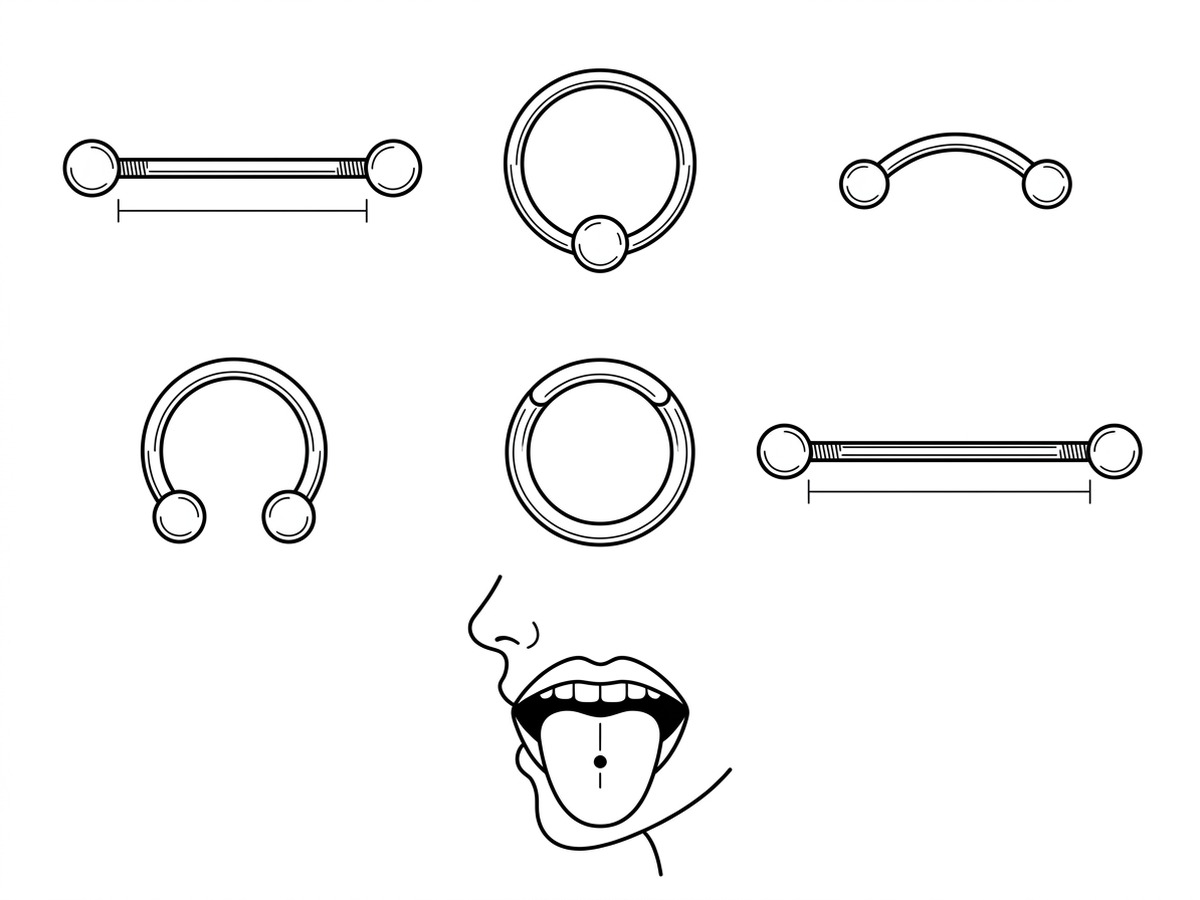
What It Is
A tongue piercing is an oral piercing that typically uses a straight barbell. Because it sits inside the mouth and moves while speaking and eating, comfort, size, and finish are especially important. Tongue jewelry should feel secure without being too long for daily wear. Starter jewelry may be longer to allow for swelling, while everyday jewelry is usually shorter after the piercing is fully healed and a professional confirms that a change is appropriate.
Common Jewelry Types
The most common tongue jewelry is a straight barbell with threaded or threadless ends. Ball ends are classic, while CZ, acrylic, glitter, or decorative ends are used for style. Some customers choose titanium steel, surgical steel, or acrylic styles depending on the product. Always read the product material description carefully. Externally threaded jewelry has threads on the bar; internally threaded or threadless styles can feel smoother during insertion when correctly made.
Common Sizes
Tongue barbells are commonly listed by gauge, bar length, and ball size. A frequent gauge is 14G, but sizing can vary. Bar length is measured across the wearable shaft between the balls, not the total length including ball ends. Common daily lengths may be shorter than starter jewelry, but anatomy and swelling history matter. Ball size affects both appearance and comfort; larger balls are more visible but may feel bulky for some wearers.
How To Choose Jewelry
Choose tongue jewelry by first confirming your current gauge and comfortable bar length. If you are unsure, measure jewelry that fits well or ask a professional piercer. For everyday wear, look for smooth ends, secure threading, and a length that does not press into the tongue or move excessively. For style, choose a finish that matches your look, but avoid designs that feel rough, sharp, or oversized in the mouth.
Safety Note
For healing, irritated, swollen, or painful tongue piercings, consult a professional piercer or healthcare provider. Do not use a jewelry change to cure infection, and do not ignore oral pain, bleeding, or unusual swelling.
Fit, Comfort, And Daily Wear
Tongue jewelry needs to balance movement and control. A bar that is too long may knock against teeth or feel distracting while speaking. A bar that is too short may press into tissue or feel tight. The right daily length should allow normal movement without excessive sliding. If you recently changed from starter jewelry, compare the new bar with the old one and pay attention to how it feels over a full day, not just during the first few minutes.
End shape also matters. Smooth ball ends are classic because they are simple and predictable. Decorative ends can add shine, color, or attitude, but they should still feel smooth. Avoid pieces with rough edges, loose parts, or shapes that feel sharp inside the mouth. If you choose acrylic or decorative styles, inspect them regularly and replace jewelry that shows damage, cracking, or worn surfaces.
Before You Order
Confirm gauge first, then bar length, then ball size. Product titles can contain several numbers, so read the full option label before adding to cart. If your current barbell fits comfortably, measure the wearable shaft between the ends. Do not include the balls in the bar length measurement. If you are between sizes or changing from starter jewelry, ask a professional piercer before ordering multiple styles.
Tongue jewelry is a personal-use item, so hygiene matters. Keep new jewelry clean before wearing it and store unused pieces away from dust and moisture. If a piece feels uncomfortable, remove it if safe to do so and get professional guidance. For healing or irritated tongue piercings, consult a professional piercer or healthcare provider before changing jewelry.